
How to Grow a Winter Container Garden
Winter doesn’t mean you have to give up gardening entirely! If you’re like me and love growing your own food year-round, a winter container garden is a great option!

Audrey's Little Farm may earn a commission after clicking links on this page at no additional cost to you. Learn more.
Containers offer flexibility—you can easily move them around or cover them when the weather gets too cold. So with a little planning, you can enjoy fresh harvests even through the winter!

Get your free Vegetable Planting Schedule!
Sign up and get this planting schedule with all planting dates sent straight to your inbox!!
Best Winter Vegetables for Containers
If I had to choose the best vegetable for winter containers, kale is the winner. It’s incredibly hardy and continues to grow in temperatures as low as 10°F. Plus, it’s packed with nutrients and extremely versatile, making it a staple in any winter garden.
In addition to kale, spinach, Swiss chard, lettuce, and peas are excellent choices for container gardening in the cooler months.
Root vegetables like carrots, radishes, beets, and garlic also perform well in pots during the colder months.
This following list isn’t comprehensive, but it offers a great variety of crops for winter container gardening along with a few tips to help you grow them successfully:
1. Kale
- Container size: 5 gallon, 12 inches in diameter.
- Sunlight: Full sun to partial shade.
- Watering: Keep soil evenly moist but not waterlogged.
- Tip: Kale is cold-hardy and can tolerate frost, making it perfect for winter. You can harvest leaves as needed.
2. Spinach
- Container size: 2 gallon, 8-10 inches in diameter.
- Sunlight: Full sun to partial shade.
- Watering: Water consistently to keep the soil moist.
- Tip: Spinach thrives in cool temperatures and can be grown close together in a container for a continuous harvest.

3. Swiss Chard
- Container size: 5 gallon, 12 inches in diameter.
- Sunlight: Full sun to partial shade.
- Watering: Keep soil consistently moist.
- Tip: Swiss chard can handle cold weather and continues to grow even after light frosts. It also provides multiple harvests throughout the season.
4. Peas
- Container size: 5 gallon, 12 inches in diameter with a trellis or support for climbing.
- Sunlight: Full sun.
- Watering: Water deeply once or twice a week, depending on rainfall.
- Tip: Peas thrive in cooler weather and need support to climb. Choose dwarf varieties if you have limited space.
5. Carrots
- Container size: 2 gallon, 8-10 inches in diameter.
- Sunlight: Full sun.
- Watering: Keep the soil moist but not soggy.
- Tip: Choose shorter carrot varieties for container gardening and make sure to thin out seedlings to allow proper root development.
6. Radishes
- Container size: 2 gallon, 8-10 inches in diameter.
- Sunlight: Full sun.
- Watering: Water regularly to keep soil moist.
- Tip: Radishes grow quickly and are perfect for small containers. You can harvest them in as little as 3-4 weeks.

7. Garlic
- Container size: 5 gallon, 12 inches in diameter.
- Sunlight: Full sun.
- Watering: Water moderately, reducing as it approaches harvest time.
- Tip: Plant garlic cloves in the fall and overwinter them for a summer harvest.
8. Onions
- Container size: 2 gallon, 8-10 inches in diameter.
- Sunlight: Full sun.
- Watering: Keep the soil moist but not soaked.
- Tip: Green onions or scallions are great for winter container gardening. They are easy to grow, can survive mild frosts, and can continue growing year-round. I have green onions that have been growing for over a year and I continue harvesting from the same plants.
9. Beets
- Container size: 2 gallon, 8-10 inches in diameter.
- Sunlight: Full sun to partial shade.
- Watering: Keep soil consistently moist.
- Tip: Beets are cold-tolerant and can be harvested when the roots are about 2-3 inches in diameter. The greens are edible, too!
Get your free Vegetable Planting Schedule!
Sign up and get this planting schedule with all planting dates sent straight to your inbox!!
10. Lettuce
- Container size: 2 gallon, 8-10 inches in diameter
- Sunlight: Full sun to partial shade.
- Watering: Water frequently, as lettuce needs constant moisture.
- Tip: Lettuce thrives in cooler temperatures and can be harvested by cutting the outer leaves, allowing it to keep producing.
11. Cilantro
- Container size: 2 gallon, 8-10 inches in diameter.
- Sunlight: Full sun, but tolerates partial shade as the weather warms up.
- Watering: Keep soil moist but avoid overwatering.
- Tip: Cilantro prefers cooler temperatures, so it’s great for fall planting. Harvest leaves regularly to encourage new growth.
All of these plants are perfect for winter container gardening, and with the proper care, you’ll get to enjoy fresh, homegrown food all winter long.

Frequently Asked Questions
Below I’ll cover some common questions related to planting and growing a winter container garden!
Can Plants Survive Winter in Pots?
Yes, many plants can survive winter in pots with the right care. Cold-hardy vegetables, in particular, are well-suited for winter container gardening, as they can handle lower temperatures. Even root crops can thrive in containers during the winter months.
The key is to ensure that your pots have well-draining soil and are consistently moist without being waterlogged.
In warmer climates (Zone 8 and above), where winters are mild, it’s much easier to grow an in-ground garden, or in raised beds, throughout the fall and winter because gardeners in these climates don’t typically don’t have snow.
However, container gardening is a great way for gardeners with harsher winter weather to still have fresh herbs and veggies because it’s much easier to move containers to shelter if needed.

What Can I Plant in My Planter for Winter?
You’d be surprised how many plants can thrive in containers during winter! Leafy greens like spinach, kale, and lettuce are excellent choices because they love cool weather and don’t require deep containers.
Check out a more comprehensive list above, along with some growing tips.
What to Do with Container Gardens in Winter?
One of the biggest perks of container gardening is mobility. When the weather takes a turn, simply move your pots to a more sheltered location like a porch, garage, or even indoors if it’s only temporary.
If you’re growing in a GreenStalk Vertical Planter, this is where it really shines. The GreenStalk comes with optional wheels, so you can easily roll it under cover or into a greenhouse when frost or heavy rain is in the forecast.
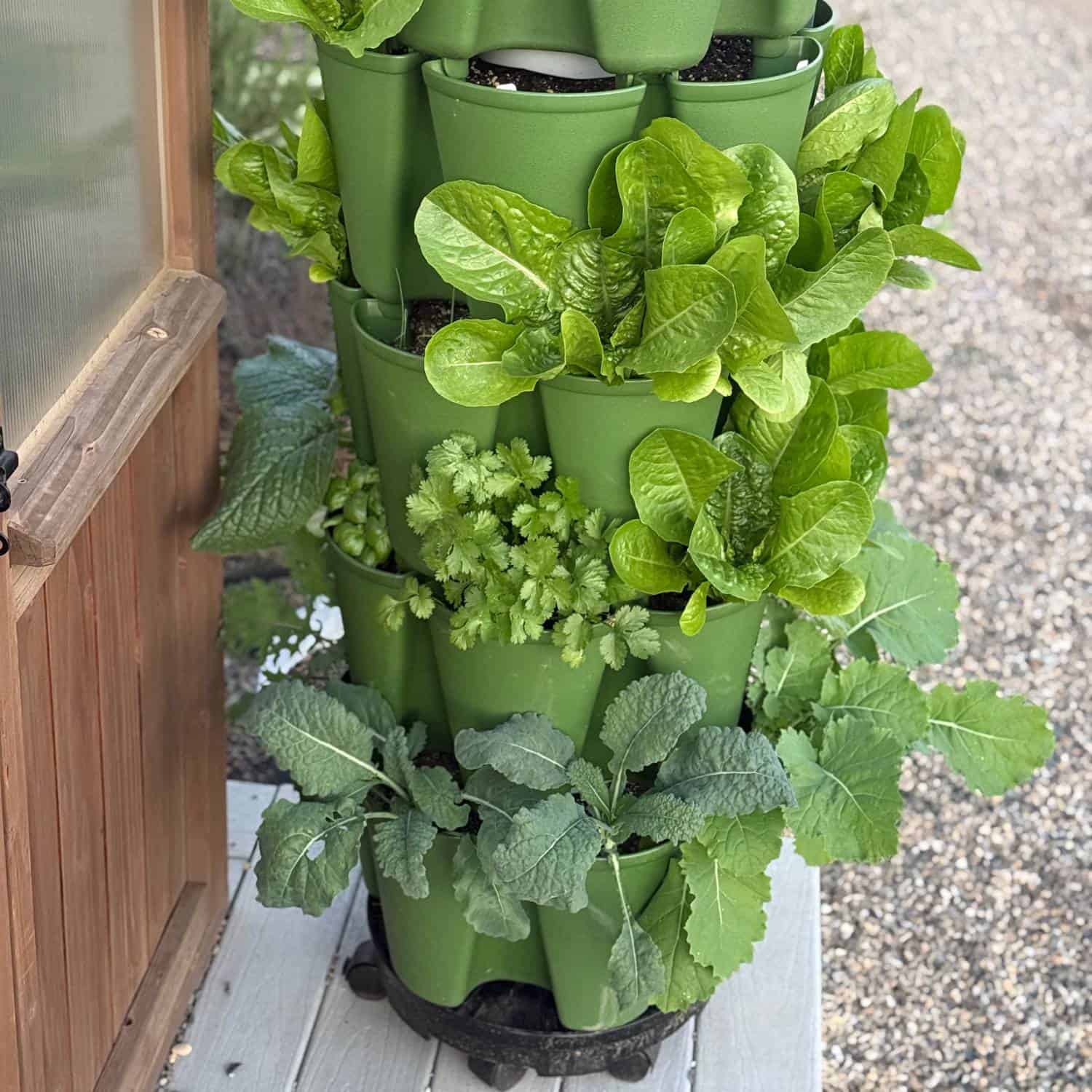
But keep in mind that plants still need light, so if you’re keeping them indoors for an extended period, set up a small grow light to make sure they continue thriving.
If moving them isn’t possible, you can protect your plants with frost cloth or row covers to help them withstand colder temperatures.
What to Do if a Frost or Freeze is Expected
Winter can be unpredictable, and sometimes frost or freezing temperatures can surprise you.
Luckily, when you’re growing in containers, you have the advantage of mobility.
Here’s how to protect your plants when a frost is expected:
- Move Containers to Shelter: If a frost is forecasted, move your pots to a sheltered location like a garage, porch, or inside the house. Even an unheated space can provide enough protection to keep your plants safe.
- Cover with Frost Cloth: If moving your containers isn’t an option, a frost cloth or old blanket can do wonders. Cover the plants completely, making sure the fabric touches the ground to trap in the heat. Avoid using plastic, as it can cause the plants to freeze where the plastic touches them. See our video on how to make an easy row cover.
- Water Before a Frost: This may seem counterintuitive, but moist soil retains heat better than dry soil. Water your plants thoroughly during the day if a frost is expected at night. The water will help keep the soil warm and protect the roots from freezing.
- Mulch for Extra Protection: Adding a layer mulch such as straw or shredded leaves to the top of your containers can help insulate the roots and protect them from freezing temperatures. This is especially important for root crops like carrots and beets.
- Bring Smaller Pots Indoors: If you have small pots or herbs growing in containers, it might be easiest to bring them inside for the night. A sunny window or even a kitchen counter will do the trick, and they can be moved back outside when the weather warms up again.

Wrapping Up
Winter is the perfect time to grow a container garden because there are so many cool weather vegetables and herbs to grow.
In the warmer months, container gardening can be more of a challenge because many summer crops don’t grow as well in containers and the heat is a challenge.
So take advantage of the cooler weather and flexibility that containers offer, moving your plants as needed and providing them with shelter when a frost or freeze is expected.
With a little planning, your winter garden will thrive, no matter the weather.
Get your free Vegetable Planting Schedule!
Sign up and get this planting schedule with all planting dates sent straight to your inbox!!
Pin it for Later

Thank you once again, Audrey, for this very helpful article. As a beginner gardener, I appreciate all the help and the information I receive from you. But please bear with me.
1. How many seeds can I plant per containers you stated?
2. For the beets, how do I know the root is 2-3 inches in diameter?
Always appreciate your responses to my questions.